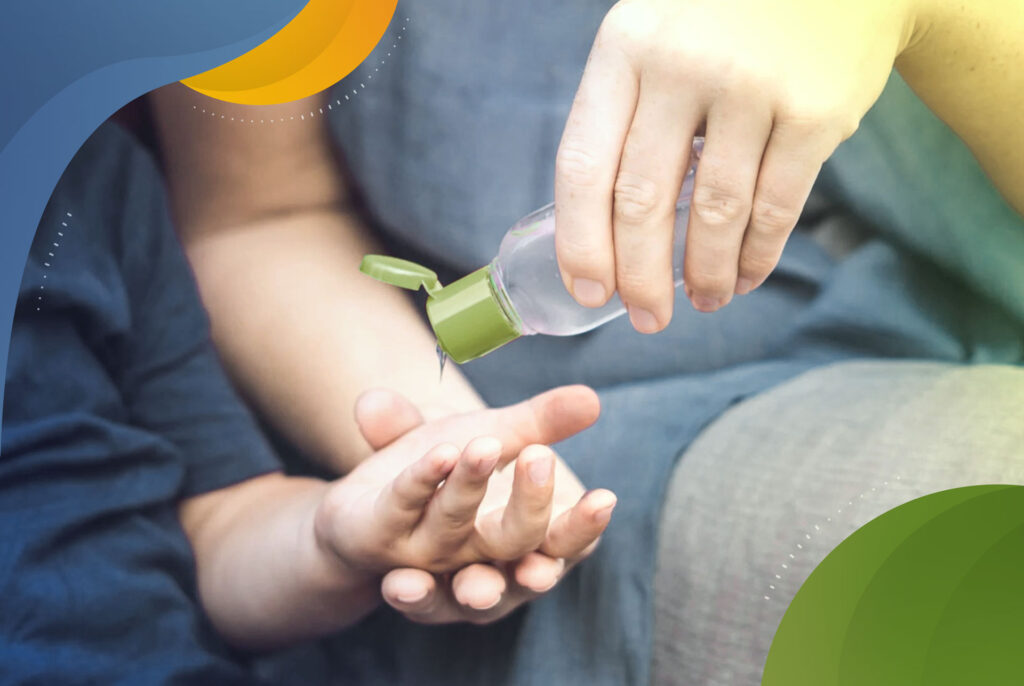
When cases of the new Coronavirus Disease (COVID-19) were rising to inexplicably high rates, countries worldwide were quick to implement safety measures aimed towards preventing the spread of the disease. From wearing of face masks and face shields, implementing social distancing measures, and even enforcing lockdowns limiting people to stay inside their homes, there have been a myriad of safety controls put into place to prevent the further spread of the novel coronavirus.
Globally, lockdowns forced people to stay inside; but with the need to resume activities to sustain the economy, protocols for the “new normal” were set in place. Alongside maintaining distance from people and wearing protective face masks were mandates for consistent hand washing or the use of hand sanitisers with at least 60% alcohol. According to the CDC, hand hygiene is one of the essential steps to avoid sickness and minimize the spread of the virus. Like most viruses, Coronavirus has an outer envelope which can be broken down by alcohol. Essentially, using alcohol-based solutions should kill the virus.
As part of the new normal, hand sanitising stations are now a common sight in stores and other public areas. Before entering, people are required to check their temperature, sign in for contact tracing, and clean their hands with hand sanitisers. Even without these sanitising stations, the government has recommended people to bring and use their own alcohol-based sanitisers.
According to a recent study in 2020, regular hand washing should be between 6 to 10 times a day to effectively reduce the risk of infection. This may seem like a lot but there has actually been a proven increase in how frequently people clean their hands. In August 2020, a poll reported that 78% of residents in the UK practised more frequent hand washing. Alcohol-based solutions have also increased in sales during the pandemic.
How does Alcohol work?
Active ingredients in alcohol-based hand sanitisers, rubs, cleansers, or disinfectants are usually isopropyl, ethanol, or a mixture of both. Ethyl alcohols, however, have been shown to be a more effective antiviral agent; whereas Isopropyl alcohols are better antibacterial agents.
To be effective in killing pathogens, solutions must contain at least 60% alcohol, which is why medical grade alcohol-based sanitisers contain a minimum 70% alcohol.
Risk of Using Alcohol-based Hand Sanitiser
Against popular belief and the health reminders consistently shared by government and private companies alike, the use of alcohol-based solutions actually increases the risk of becoming susceptible to COVID-19. Dr Harley Farmer uncovers the hidden truths in his book: Coronoia: What the WHO failed to tell us and the UK Cabinet refused to hear.
Dr Harley dives into the fact that alcohol is actually pro-COVID. Despite the widespread use of the substance to prevent the disease, Dr Harley Farmer unveils the links between alcohol vapours, respiratory mucosa, and SARS-CoV-2, explaining how anyone who uses alcohol-based products only makes themselves more vulnerable to disease. When people use rubbing alcohol, the alcohol vapours weaken the mucosal linings of respiratory passageways, making it easier for viral particles to attack cells in the lungs. By weakening one of the body’s initial physical immune defences, viral particles are able to enter into the lungs and infect the cells inside.
The fact that alcohol vapours dissolve mucus has been proven since 1952. It weakens the mucosal layer that is supposed to keep the virus out. Dr Harley suggests that the widespread use of alcohol-based hand sanitisers has done the opposite of what it was expected to do. While the alcohol does kill the virus and other pathogens, it heightens the chance that someone who has already been exposed to the virus becomes sick.
What Dr Harley proposes in his book is that the inherent properties of the novel coronavirus are not enough for it to be causing a worldwide pandemic. When you consider the lifecycle of the virus, people need not die for it to successfully spread and propagate. But, with over 5 million deaths due to COVID-19, the virus has exhibited a wide array of effects ranging from minimal to lethal. Some people are asymptomatic, others experience mild symptoms, and there are those who become critically ill and die. And the use of alcohol-based solutions may be a potential cause to the increasing number of people falling into the latter category.
Dr Harley explains the COVID-19 Cascade that occurs when you or your child uses an alcohol sanitiser. Right after cleaning your hands and, supposedly ridding yourself of the virus, the alcohol will evaporate and you will most likely inhale the solvent alcohol vapours. The substance passes into your lungs, effectively weakening the mucus defences. When the coronavirus enters your lungs, it will enter your AT2 cells.
The AT2 cells are secretory cells of the lungs. Because these cells are one of the first to become infected due to its outer positioning on the respiratory walls, the cells will now be reprogrammed by the viral RNA to make more of the virus inside your body and less of the protective mucus. These new viral particles will now infect adjacent AT2 cells, as well as other cells in your lungs. As more AT2 cells become infected, they create less mucus, further lessening your body’s natural defences. When most of your AT2 cells have been affected, you will most likely be experiencing the common flu-like symptoms of the virus, or even be at the point of death. This can take a few days, weeks, or even nearly a month, depending on how well your body is able to fight off the disease.
Mass vaccination programs have been implemented to help both adults and children strengthen their immune system with an experimental vaccine. However, there are still a number of risks that come with the vaccine. And even with it, there is no guarantee of complete immunity from the disease. While these vaccines continue to be administered globally, alcohol-based hand sanitisers, disinfectants, and cleaning solutions continue to be used at a personal and commercial level. Despite the many things we try to do to keep ourselves healthy and safe, the very things that you believe to be protecting you may potentially be an eventual cause for your demise.
In many schools, hand sanitising stations are situated on most entry ways. In some, teachers even guide students to clean their hands with the alcohol as a requirement before entering. With your new understanding of how alcohol actually works in favour of the disease, it may also start to become evident that allowing children to weaken protective barriers in their body, especially ones that are meant to naturally keep pathogens out, is actually a counterintuitive measure to protecting them. Instead, schools place an additional factor that puts them at risk just before they come into contact with more kids who are potential carriers of the virus themselves.
With better information and a deeper understanding of medically proven facts, you should be able to prevent potential risks to you and your children’s health. Dr Harley provides an in-depth discussion on this topic in this NewGenne blog.